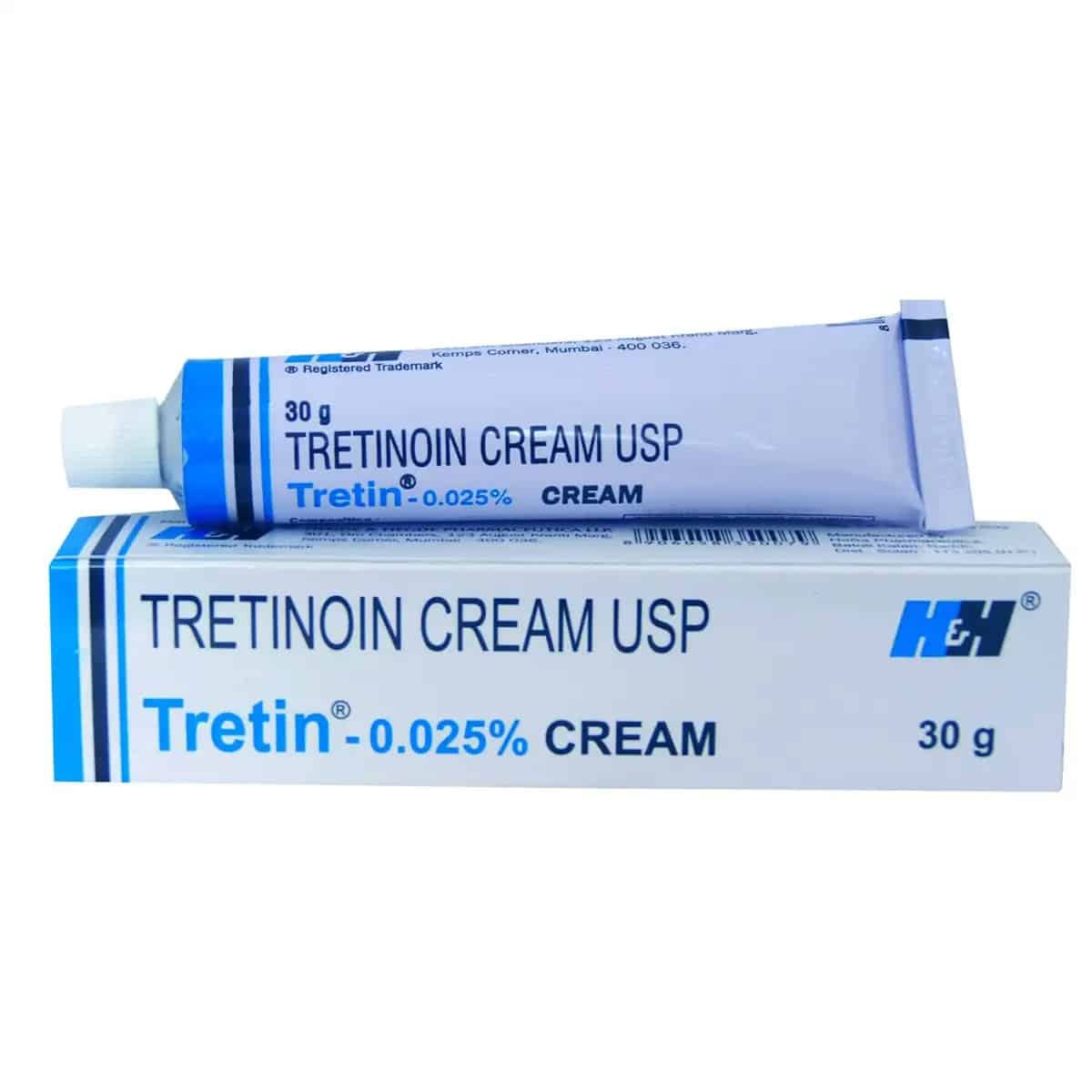
Most expensive anti-aging creams in your bathroom cabinet are a complete waste of money. You are paying for luxury scents and heavy glass jars when the actual chemistry you need is available for a fraction of the cost under a prescription.
I used to think that “luxury” meant better results. I spent hundreds on serums that promised the moon but delivered nothing more than a slightly hydrated face. Then I looked into the science of retinoids and realized I was being conned by marketing.
If you want real results, you have to stop looking at the pretty packaging. You need a heavy hitter. You need tretinoin.
Tretinoin isn’t some gentle, “feel-good” overnight miracle. It is a potent, aggressive, and highly effective derivative of Vitamin A. It doesn’t care about your expensive facial massages or your soothing chamomile masks.
It works by fundamentally changing how your skin behaves at a cellular level. It is the gold standard for a reason, even if it makes your face feel like a desert for the first few weeks.
Why Your Cells Need a Kick in the Pants
The primary mechanism of tretinoin is what dermatologists call rapid cell turnover. Most people think skin cells just sit there, but they are constantly being born in the lower layers and moving toward the surface.
As we age, that conveyor belt slows down. The dead cells pile up on the surface, leading to a dull complexion, clogged pores, and those fine lines that seem to appear overnight. Tretinoin forces that conveyor belt to speed up significantly.
By accelerating this process, the cream helps unclog pores and smooth the skin’s surface. It also works to fade discolorations that have settled deep in your dermis. It’s a deep-cleaning process from the inside out.
This is particularly effective for photoaging. If you have spent years in the sun without enough SPF, your skin carries the evidence in the form of dark spots and uneven texture. Tretinoin addresses this specifically. According to research published by scientific studies in PMC, tretinoin helps improve dyspigmentation by inhibiting tyrosinase and increasing the shedding of melanin-containing cells.
It is quite a violent process for your skin. It forces the old, damaged layers to shed to make room for the new ones. It is hard work. Your skin is basically being rebuilt while you sleep.
You might notice your skin peeling or becoming red. This is the “retinoid ugliness” phase. It is a sign that the medication is actually doing its job, though it feels incredibly uncomfortable while you are navigating it.
If you are looking for options, you can find [farmaciabreda.com to help you navigate the various ways to access these dermatological tools. Understanding the difference between a boutique serum and a medical-grade cream is essential for your wallet.
Don’t expect magic overnight. You are asking your body to rewrite its biological programming, and that takes time, patience, and a lot of moisturizer.
The Cost of Looking Twenty Years Younger
Price is often the biggest barrier to entry for high-quality skincare. People assume that because tretinoin is a prescription medication, it must be prohibitively expensive. This is a myth.
In reality, tretinoin is surprisingly accessible. Because it is an older, off-patent drug, the manufacturing costs are relatively low. You can find several versions of this medication depending on how you choose to source it.
For example, Retin-A, the classic brand for tretinoin cream, is often used to treat wrinkles and other skin conditions, and most customers find they pay around $16 for this medication. When you compare that to a $150 “retinol-infused” luxury cream, the math becomes quite simple.
It’s a massive difference. You can essentially buy a whole year’s supply of actual medicine for the price of one high-end moisturizer. Why wouldn’t you?
There are several ways to approach the pricing and availability of these topical treatments:
- Prescription brands like Retin-A provide a familiar, regulated option for those with a doctor’s guidance.
- Generic versions (like Atralin or Avita) are often more affordable and provide the same active ingredient.
- Coupon services like GoodRx can significantly lower the out-of-pocket cost at local pharmacies.
- Online pharmacies offer convenience for those who want to avoid the doctor’s office visit.
The real cost isn’t the cream itself. It’s the incidental spending you’ll need to do to support it. You cannot use tretinoin without a dedicated, heavy-duty moisturizing routine and a non-negotiable commitment to daily sunscreen.
If you skip the sunscreen, you are essentially pouring gasoline on a fire. Tretinoin makes your skin more sensitive to UV rays, which means you’ll end up with more sun damage if you aren’t careful. It’s a catch-22 that requires discipline.
If you want to save money, buy the generic. If you want convenience, use a pharmacy aggregator. Just don’t be fooled into thinking you need to spend a fortune to get the active ingredient that actually works.
Retinol vs. Tretinoin: The Great Debate
I get asked this constantly: “Isn’t retinol the same thing?” No. It is not the same thing. If you are using retinol and wondering why your skin looks exactly the same as it did three years ago, this is why.
Retinol is a “pro-drug.” This means it is not the active form of Vitamin A. When you apply it to your skin, your body has to convert it into retinaldehyde, and then finally into retinoic acid. Your skin does this work on its own, but the process is inefficient.
Tretinoin is pure retinoic acid. It skips all the conversion steps and goes straight to work on your receptors. It is much more potent, much faster, and much more likely to cause irritation. It is the difference between a slow-burning candle and a blowtorch.
| Feature | Retinol | Tretinoin |
|---|---|---|
| Potency | Low to Moderate | Very High |
| Conversion | Requires skin conversion | Directly active |
| Speed | Slow (months) | Fast (weeks/months) |
| Irritation Risk | Low | High |
You can see the distinction clearly in the table above. If you have sensitive skin or are just starting your journey, retinol might be a safer, gentler starting point. It’s a way to “train” your skin without causing a massive inflammatory response.
However, if you have acne that won’t budge or wrinkles that feel deeply etched, retinol is likely going to be too weak for your needs. You need the heavy lifting that only a direct retinoid can provide. It is a different tool for a different job.
Most people start with a low concentration of tretinoin to avoid the dreaded “peeling phase.” You might start with 0.025% or 0.05% and work your way up. It is a slow, methodical process of building tolerance.
If you rush it, you will fail. You will end up with a red, flaky mess that looks like you’ve been through a sandstorm. Take your time. Your skin needs time to adapt to the new speed of its own life cycle.
The Side Effects You Can’t Ignore
Let’s talk about the downside. It’s not all glowing skin and compliments. Tretinoin is a demanding master. It requires a specific set of behaviors to use correctly without destroying your skin barrier.
The most common issues are dryness, redness, and peeling. Because it speeds up cell turnover, your skin is shedding faster than it can replenish its natural moisture levels. This leads to a compromised skin barrier, making you prone to stinging and sensitivity.
You must be prepared for the “purge.” This is when the medication brings everything to the surface. If you have underlying acne, you might see an increase in breakouts before you see an improvement. It’s not the cream making you break out; it’s the cream clearing out what was already there. This is a temporary phase.
To manage this, you should follow these practical guidelines:
- The Sandwich Method: Apply moisturizer, then tretinoin, then moisturizer again to buffer the irritation.
- Frequency: Start by using it only twice a week. Increase frequency only when your skin stops feeling tight or itchy.
- Quantity: You only need a pea-sized amount for your entire face. More is not better; more is just more irritation.
- Sun Protection: Wear SPF 30 or higher every single day, even if you are staying indoors.
I remember when I first started. My nose was peeling so badly it looked like I had a sunburn, even though I stayed out of the sun. It was a mess. But if you stick with it, the skin on the other side of that discomfort is incredibly smooth.
Don’t use it on damp skin. This is a common mistake. Damp skin absorbs the medication too deeply and too quickly, which exponentially increases the risk of irritation. Apply it to completely dry skin at night.
You might be thinking, “Is it worth the hassle?” It depends on what you’re trying to fix. If you have severe acne or deep wrinkles, the answer is a resounding yes. If you just want a little extra glow, stick to a basic moisturizer and a vitamin C serum.
The real question is whether you have the discipline to use it correctly. Tretinoin is not a “set it and forget it” product. It is a commitment to a specific, disciplined skincare routine that requires you to respect the potency of the chemical you are applying.
Will it work even if you’re a skeptic? There’s a useful breakdown over at farmaciabreda.com.
FAQ
What does the tretinoin cream do?
Tretinoin is a topical retinoid that accelerates cell turnover to treat acne, fine lines, and sun damage.
What is the downside of tretinoin?
Common side effects include skin irritation, redness, dryness, and increased sensitivity to sunlight.
Is it good to use tretinoin every day?
While some can tolerate daily use, it is often recommended to start with a few times a week to build tolerance and avoid irritation.
Which is better, retinol or tretinoin?
Tretinoin is more potent and effective for anti-aging and acne because it is the active form of Vitamin A, whereas retinol must be converted by the skin.
Should I use sunscreen with tretinoin?
Yes, because tretinoin increases sun sensitivity, daily SPF application is essential to prevent skin damage.