Most people waste money on overpriced, diluted serums that do nothing. They spend hundreds on “miracle” creams that promise the moon but are really just expensive moisturizers. Meanwhile, the actual gold standard is sitting in a prescription bottle, ignored because people are afraid of a little redness.
If you want real results, stop treating your face like a delicate porcelain doll. Treat it like an organ that needs a biological reset. That means moving past the weak, over-the-counter stuff and using the heavy hitters.
Retinol is just training wheels. It’s the “diet” version of what you actually need to change your skin texture. If you’re still relying on those drugstore bottles to fix deep lines or stubborn acne, you’re basically trying to put out a house fire with a spray bottle.
Tretinoin is the real deal. It’s a retinoid that works much deeper than its weaker cousins. It isn’t a suggestion; it’s a command to your skin cells.
The Biological Reset
You need to understand what’s actually happening under your epidermis when you apply this stuff. Tretinoin works by promoting rapid cell turnover. This helps unclog pores, smooth the surface, and fade discoloration. Most people think skin aging is just something that happens on the surface, but it’s actually a slow, systemic failure of your cells to replace themselves at a decent rate.
When you use a topical retinoid, you’re forcing your skin to speed up its entire production line. Instead of old, dead cells sitting on your face like dust, they get pushed to the surface and shed faster to make room for new, healthy cells. This is what eventually smooths out those fine lines and gets rid of the rough patches you feel when you wash your face in the dark.
It isn’t a magic wand. It’s a biological accelerator. You’re essentially telling your skin to stop being lazy. This is why the transition period is a nightmare for beginners who jump in without a plan.
But the payoff is the only thing that matters. If you can survive the initial adjustment phase, the change in texture is undeniable. You move from looking “tired” or “congested” to having a clarity that no amount of concealer can replicate.
One thing to keep in mind: there’s a huge difference between the various strengths on the market. You can’t just pick a random tube and hope for the best. You need to know what you’re putting on your face.
| Product Type | Primary Use Case | Intensity Level |
|---|---|---|
| Retinol (OTC) | Maintenance / Prevention | Low |
| Adapalene (OTC) | Acne-prone skin | Moderate |
| Tretinoin (Prescription) | Wrinkles, Acne, Hyperpigmentation | High |
The Cost of Clarity
Price is usually the biggest barrier for anyone who wants to actually fix their skin rather than just “improve” it. There’s a massive gap between $80 luxury creams sold in boutiques and the medical-grade ingredients that actually work. You don’t need to spend a fortune to get professional results, but you do need to know where to look.
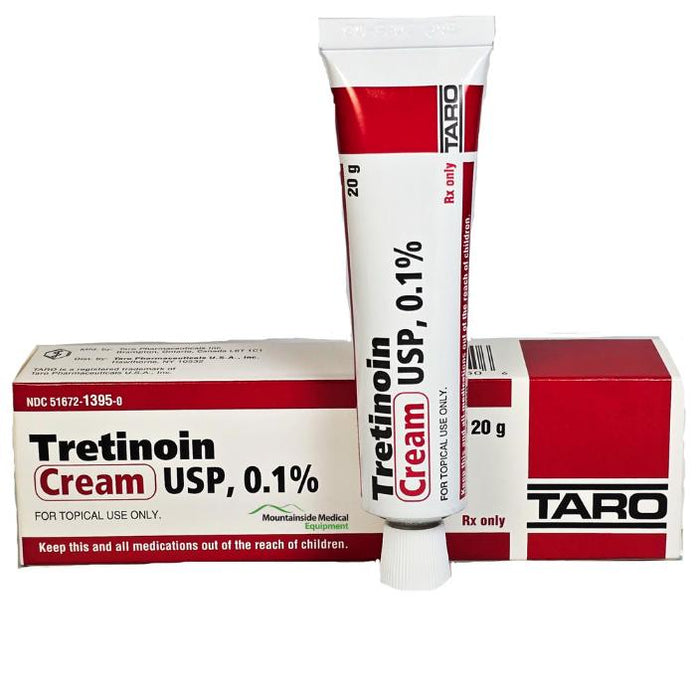
Most customers pay around $16 for this medication. That’s a fraction of what people spend on “anti-aging” luxury brands that are mostly water and fragrance. It’s a bit ridiculous that the most effective tool in dermatology is often the most affordable one once you cut out the marketing fluff. If you’re looking for tretinoin cream Spain or anywhere else, the price should be a secondary concern to the actual concentration of the active ingredient.
You’ll find several different names for this drug depending on how you source it. Tretinoin (Retin-A, Atralin, Avita) is a moderately priced drug used to treat acne and other skin conditions when applied topically. You aren’t paying for a fancy box or a celebrity’s endorsement; you’re paying for the chemical that actually does the work.
I’ve seen people spend a whole paycheck on a serum with 0.1% retinol, when they could have used a prescription-strength tretinoin for a tenth of the cost and seen twice the results. It’s a hard pill to swallow for those conditioned to think “expensive” means “effective.”
The reality is that the pharmacy is your best friend. With a prescription, the cost of maintaining your skin’s health becomes almost negligible. It’s a small price to pay for a permanent change in how your skin behaves.
The “Retinoid Ugly Duckling” Phase
If you start using this every day immediately, you’re going to regret it. There is a period that dermatologists call “retinoid ugliness,” and it is real. Your skin might peel, turn red, itch, and it will almost certainly feel tighter and more sensitive than usual. This isn’t a sign that the product is “working harder”; it’s a sign you’re destroying your moisture barrier because you’re being impatient.
You have to be disciplined. You can’t go from zero to a full pea-sized amount of 0.1% cream every single night. That’s a recipe for a chemical burn. You start small, maybe two or three times a week, and you wait. You wait until your skin stops flaking before you even think about increasing the frequency. It’s a slow process that requires more patience than most people actually possess.
And if you don’t use sunscreen, you’re wasting your time. Tretinoin makes your skin more sensitive to the UV rays that cause the very wrinkles and dark spots you’re trying to fix. If you apply tretinoin at night and walk out into the sun without protection the next morning, you’re actively sabotaging yourself.
I’ve seen people complain that tretinoin “didn’t work” only to find out they were using it incorrectly or neglecting the basics. You have to respect the chemistry and the way it interacts with your skin’s natural defenses.
The downside is real. The side effects can be significant if you’re careless. You might experience:
- Dryness and flaking
- Redness and irritation
- Increased sensitivity to sunlight
- Burning sensation upon application
But this is part of the deal. You’re forcing a biological overhaul, and you can’t expect your skin to handle that without a bit of a struggle first.
Prescription Power vs. Over-the-Counter Hype
The debate between retinol and tretinoin isn’t even a debate; it’s a matter of scale. Retinol must be converted by your skin into retinoic acid before it can do anything. This conversion is inefficient and slow. Tretinoin, however, is already retinoic acid. It hits the target immediately without waiting for your skin to do the heavy lifting. It’s the difference between someone trying to build a house by hand versus a construction crew with heavy machinery.
This is why the results look different. When you use retinol, you might see a slight improvement in skin glow after a few months. When you use tretinoin, the changes are structural. You’re seeing a reduction in hyperpigmentation, smoother fine lines, and a genuine change in how your skin handles oil. It’s a much more aggressive approach for a much more definitive result.
It’s also used for more than just vanity. Because it works so well on a cellular level, it is a standard medical treatment for acne. It unclogs pores from the inside out, making it a dual-purpose tool for both aging and breakouts. You’re killing two birds with one stone, provided you have the skin’s resilience to handle it.
Don’t get caught up in the marketing of “clean beauty” or “natural ingredients” for this. Your skin doesn’t care if an ingredient is “natural”; it only cares if the molecule is the right shape to bind to your retinoic acid receptors. Tretinoin is a tool, not a spa treatment. Use it like one.
The transition from “improving” your skin to “transforming” it is steep. It requires a commitment to the process, the side effects, and the sun protection that follows.
The skin you have tomorrow depends entirely on how you treat the skin you have today.
A few things readers ask
What does the tretinoin cream do?
Tretinoin is a retinoid that accelerates cell turnover to treat acne, fine lines, and hyperpigmentation.
What is the downside of tretinoin?
Common side effects include skin irritation, dryness, peeling, and increased sun sensitivity.
Is it good to use tretinoin every day?
While you can use it daily, it is often better to start 2-3 times a week to build tolerance and minimize irritation.
Which is better, retinol or tretinoin?
Tretinoin is more potent and effective because it is a direct form of Vitamin A, whereas retinol must be converted by the skin.
How should I apply tretinoin cream?
Apply a pea-sized amount to clean, dry skin at night, followed by a moisturizer to prevent dryness.